logo
Home ProductsThermally Conductive Electrical Insulator

Custom High Temperature Thermal Conductive Insulator Material Silicone Pad For Audio And Video Components

Custom High Temperature Thermal Conductive Insulator Material Silicone Pad For Audio And Video Components

Product Details:
Place of Origin: China
Brand Name: Ziitek
Certification: UL & RoHS
Model Number: TIS100-16-01
Document: TIS100-16-01_Data Sheet.pdf
Payment & Shipping Terms:
Minimum Order Quantity: 1000pcs
Price: 0.1-10 USD/pcs
Packaging Details: 24*13*12cm cartons
Delivery Time: 3-6 work days
Payment Terms: T/T
Supply Ability: 100000/day
Contact Now
Detailed Product Description
Product Name: Custom High Temperature Thermal Conductive Insulator Material Silicone Pad For Audio And Video Components Keyword: Thermal Conductive Insulator
Recommended Operating Temperature: -40~200 Compliance: UL & RoHS
Construction: Ceramic Filled Silicone Elastomer / Fiberglass Feature: Soft Surface And Good Thermal Conductivity
Thermal Conductivity: 1.6 W/m·K Application: Audio And Video Components
Highlight:

Thermal Conductive Insulator Material Silicone Pad

,

Audio And Video Components Silicone Pad

Custom High Temperature Thermal Conductive Insulator Material Silicone Pad
Product Overview

TIS® 100-16-01 Series is a thermally conductive and electrically insulating product that achieves insulating and thermal conductive effects by adding insulating silicone-based materials into thermally conductive materials. The fiberglass reinforcement provides excellent tear resistance and puncture resistance. This non-toxic, environmentally friendly, and flame-retardant material is primarily used to isolate power supplies from heat sinks.

Key Features
  • Relatively soft surface
  • Excellent heat conductivity
  • Good dielectric strength
  • Low thermal resistance with high voltage isolation
  • Resistant to tears and punctures
Applications
  • Car Battery & Power Supply
  • Power semiconductors
  • Audio and Video components
  • Motor controllers
  • Set top boxes
  • Automobile control devices
  • Home appliance control boards
Technical Specifications
Property Value Test Method
Color Gray Visual
Construction & Composition Ceramic filled silicone elastomer / Fiberglass ZKTM J024
Thickness range (inch/mm) 0.009/0.23 | 0.010/0.25 | 0.012/0.30 | 0.018/0.45 ASTM D374
Hardness (Shore A) 80 ASTM D2240
Density (g/cm³) 1.8 ASTM D792
Tensile Strength (Mpa) ≥30 ASTM D412
Recommended Operating Temperature (℃) -40~200 ZKTM J025
Breakdown voltage (V) ≥4000 | ≥5000 | ≥8000 | ≥10000 ASTM D149
Dielectric Constant@1MHz 5.0 ASTM D150
Volume Resistivity (Ohm*cm) >1.0x10¹⁴ ASTM D257
Thermal Conductivity (W/m*K) 1.6 ASTM D5470
Thermal impedance (℃*in²/W) @25psi 1.11 | 1.30 | 1.40 | 2.20 ASTM D5470
Flame Rating V-0 UL94 (E331100)
Product Specifications

Standard Thickness: 0.009"(0.23 mm), 0.010"(0.25 mm), 0.012"(0.30 mm), 0.018"(0.45 mm)

Standard Size: 12"X160" (304 mmX48.7 m)

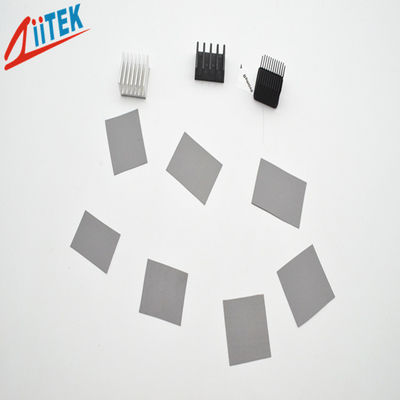
The TIS® series is available in custom shapes and various forms. For other thicknesses or more information, please contact us.

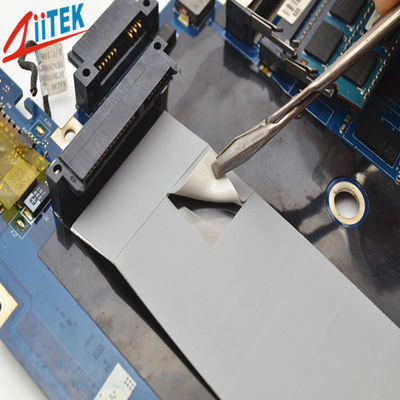
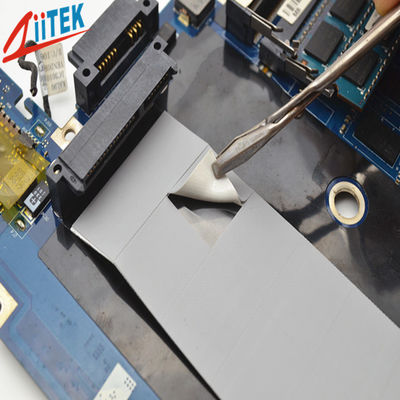
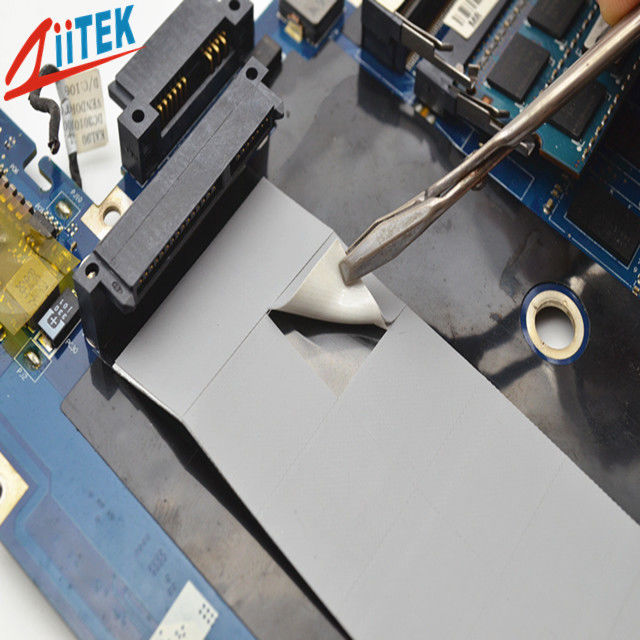
TIS thermal conductive insulator material product image
Packaging & Lead Time
  • PET film or foam protection
  • Paper card separation between layers
  • Export carton packaging
  • Customized packaging available

Lead Time: 5000 pieces - To be negotiated

Company Culture

Quality: Do it right the first time, total quality control

Effectiveness: Work precisely and thoroughly for effectiveness

Service: Quick response, on-time delivery and excellent service

Teamwork: Complete teamwork across all departments to provide satisfying service for customers

Frequently Asked Questions
How do I choose the right thermal interface material?

The selection of a suitable TIM typically requires consideration of heat source power, gap thickness, target thermal resistance, operating temperature, assembly pressure, electrical insulation requirements, flame-retardant requirements, reliability, and cost.

What is Interface Thermal Resistance?

Interface thermal resistance refers to the resistance encountered when heat transfers across an interface. If the TIM does not make proper contact with the heat source or heat sink, the actual thermal resistance can remain high even when the material itself has high thermal conductivity.

Is TIM thickness important?

Yes. Under otherwise identical conditions, increasing TIM thickness generally increases thermal resistance. Therefore, the appropriate thickness should be selected to adequately fill the actual gap rather than simply choosing the thinnest possible material.

Do all thermal interface materials need to be electrically insulating?

Not all applications require electrical insulation. However, for applications such as batteries, power modules, IGBTs, and other power electronic components, electrical safety is often important. In these cases, parameters such as dielectric strength and volume resistivity should be carefully evaluated.

Contact Details
Dongguan Ziitek Electronical Material and Technology Co., Ltd

Contact Person: Dana Dai

Tel: +86 18153789196

Send your inquiry directly to us (0 / 3000)

Other Products