| Place of Origin: | China |
| Brand Name: | Ziitek |
| Certification: | UL |
| Model Number: | TIF1120-20-10UF thermal pad |
| Document: | TIF100-20-10UF_Data Sheet.pdf |
| Minimum Order Quantity: | 1000 pcs |
|---|---|
| Price: | 0.1-10 USD/PCS |
| Packaging Details: | 24*13*12cm carton |
| Delivery Time: | 3-8 work days |
| Payment Terms: | T/T |
| Supply Ability: | 100000pcs/month |
| Name: | 3.0mmT Thickness 2.0W/MK High Performance CPU Thermal Pad Soft Silicone Thermal Pad For CPU Cooling | Certification: | ISO9001 |
|---|---|---|---|
| Feature: | Good Softness And Fillability | Keyword: | CPU Thermal Pad |
| Recommended Operating Temperature: | -40 To 200℃ | Thickness: | 3.0mmT |
| Thermal Conductivity: | 2.0W/mK | Hardness (Shore Oo): | 75 |
| Highlight: | 2.0W/MK Heat Dissipation Pad,CPU Heat Dissipation Pad,2.0W/MK Thermal Pad For Heat Sink |
||
3.0mmT Thickness 2.0W/MK High Performance CPU Thermal Pad — Soft Silicone Thermal Pad for CPU Cooling
Ziitek Electronic Material and Technology Ltd was founded in 2006 and is headquartered in Dongguan, Guangdong. It is a high-tech enterprise specializing in heat conduction, heating, sealing, and EMI products. To respond quickly to global customer demand, the company has established production bases in Kunshan (Jiangsu), Taiwan Province, and Vietnam, and continues to expand its global production footprint to ensure efficient delivery and localized service.
Ziitek's product system covers thermal interface materials, EMI shielding, heating products, foamed silicone seals, and thermal engineering plastics. These products are widely used in new energy vehicles, energy storage, AI servers, 5G communications, aerospace, and other fields. The company has passed certifications including IATF16949 and ISO9001, and its products meet ROHS, REACH, and UL specifications, serving the global market with reliable quality.
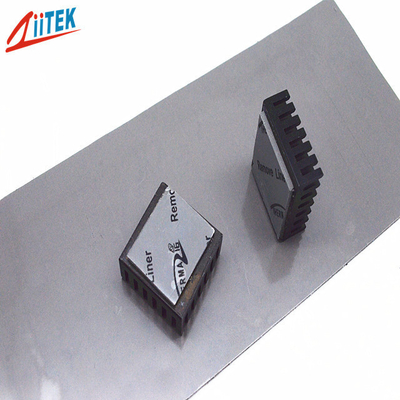
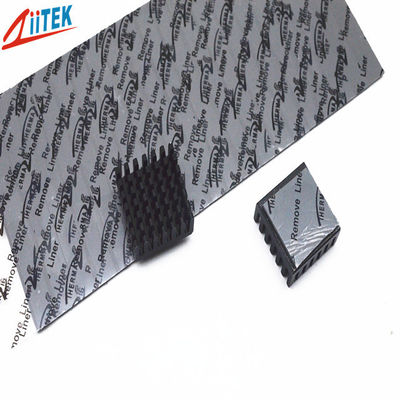
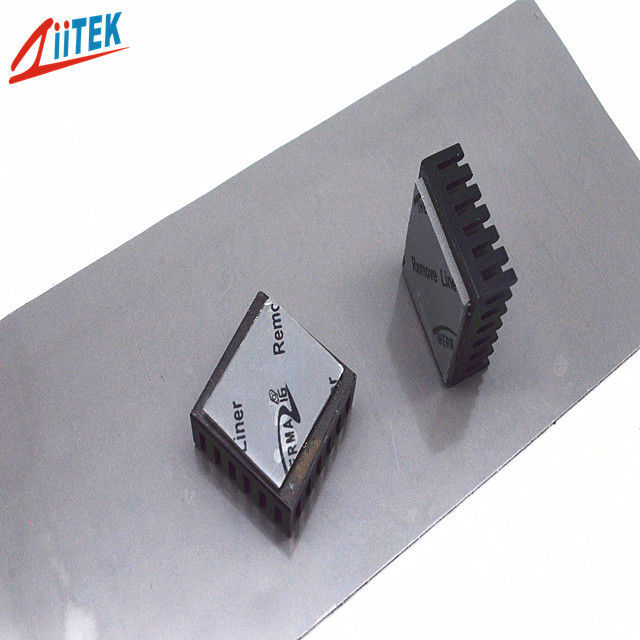
The TIF®1120-20-10UF Series is a structurally supportive thermal pad designed to provide good heat dissipation while also ensuring structural support and durability. It reliably fills interface gaps, transfers heat, and offers mechanical support for stacked components, resisting compressive deformation. This product is an ideal choice for applications that require a balance between heat dissipation, insulation, and mechanical stability.
| Property | Value | Test Method |
|---|---|---|
| Color | Gray | Visual |
| Construction & Composition | Ceramic filled silicone elastomer | ZKTM J024 |
| Density (g/cm³) | 2.8 | ASTM D792 |
| Thickness Range (inch/mm) | 0.010~0.200 / 0.25~5.00 | ASTM D374 |
| Hardness (Shore OO) | 75 | ASTM 2240 |
| Recommended Operating Temperature | -40 to 200℃ | ZKTM J025 |
| Breakdown Strength (V/mm) | ≥5500 | ASTM D149 |
| Dielectric Constant @1MHz | 6.5 | ASTM D150 |
| Volume Resistivity (Ohm-cm) | >1.0×10¹² | ASTM D257 |
| Flame Rating | V-0 | UL 94 (E331100) |
| Thermal Conductivity (W/m-K) | 2.0 | ASTM D5470 |
| Thermal Conductivity (W/m-K) | 2.0 | ISO 22007 |
The TIF series is available in custom shapes and various forms. For other thicknesses or more information, please contact us.

Q: What is a Thermal Interface Material (TIM)?
A: TIM (Thermal Interface Material) refers to a class of materials used to fill microscopic air gaps between a heat source and a heat sink. TIMs help reduce interface thermal resistance and improve heat transfer from the heat source to the cooling structure. Common TIMs include thermal pads, thermal gels, thermal greases, phase change materials (PCMs), and liquid metal.
Q: What is thermal conductivity?
A: Thermal conductivity indicates a material's ability to conduct heat and is typically measured in W/m·K. Under the same testing conditions, a higher thermal conductivity generally indicates better heat-conduction capability.
Q: Do thermal silicone pads age over time?
A: Like all polymer-based materials, thermal silicone pads can be affected by long-term exposure to temperature, humidity, and environmental conditions. High-quality thermal silicone pads are typically evaluated through tests such as high-temperature aging, thermal cycling, and humidity resistance to verify long-term stability.
Q: What is the difference between a thermal silicone pad and thermal grease?
A: A thermal silicone pad is a pre-formed solid material that is easy to install and provides controlled thickness. Thermal grease is a paste-like material that can fill very small surface irregularities and gaps, but its application thickness, pump-out behavior, and long-term stability need to be carefully considered.
Q: What is the difference between a thermal silicone pad and thermal gel?
A: A thermal pad is a pre-formed material, while thermal gel can be dispensed or coated to fill complex and irregular gaps. The choice between the two depends on the application structure, gap conditions, assembly method, and performance requirements.
Q: Can thermal silicone pads be used in AI servers?
A: Yes. Thermal silicone pads can be used between GPUs, CPUs, memory modules, power modules, and other heat-generating components and their corresponding cooling structures. They are commonly considered for thermal management in high-performance computing systems.
Contact Person: Dana Dai
Tel: +86 18153789196
Overall Rating
Rating Snapshot
The following is the distribution of all ratingsAll Reviews