Silicone Thermal Pad Engineered For Thermal Management Systems
Silicone Thermal Pad Engineered For In Thermal Management Systems To Enhance Device Reliability And Operational Stability
Company Profile
Ziitek Electronic Material and Technology Ltd was founded in 2006 and headquartered in Dongguan, Guangdong. As a high-tech enterprise specializing in heat conduction, heating, sealing and EMI products, the company has established production bases in Kunshan, Jiangsu, Taiwan Province and Vietnam to ensure efficient delivery and localized services globally.
Zhaoke's product system covers thermal interface materials, EMI shielding, heating products, foamed silicone seals and thermal engineering plastics, widely used in new energy vehicles, energy storage, AI servers, 5G communications, aerospace and other fields.
Certifications
ISO9001:2015 • ISO14001:2004 • IATF16949:2016 • IECQ QC 080000:2017 • UL
Product Description
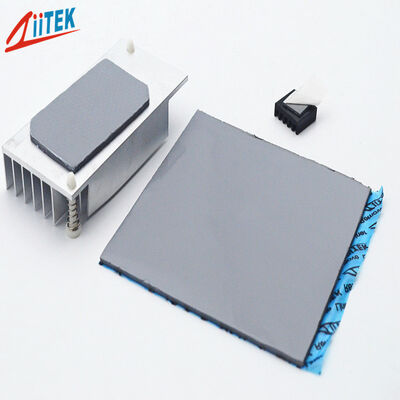
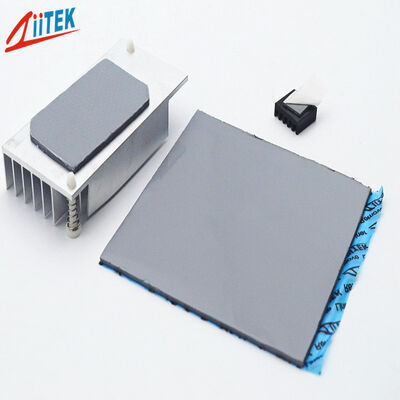
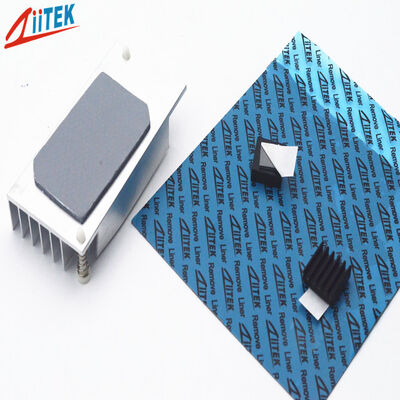
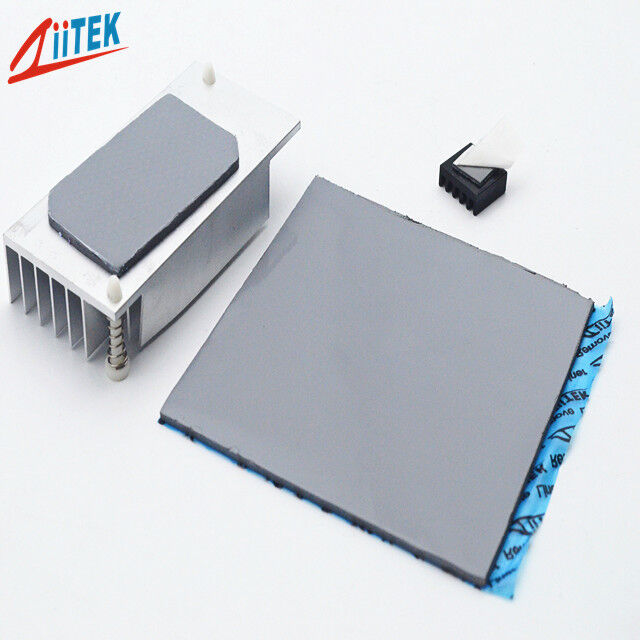
TIF®️100 3040-10 Series is a well-balanced, general-purpose thermal pad. It offers good thermal conductivity and moderate hardness. This balanced design provides both excellent surface conformity and superior ease of use, making it capable of effectively transferring heat and providing basic physical protection for a wide range of electronic components. It is an ideal choice for addressing medium to high power heat dissipation needs, achieving the best balance between cost and performance.
Key Features
- High thermal conductivity
- Good softness and fillability
- Self-adhesive without the need for additional surface adhesive
- Good insulation performance
Applications
- Semiconductor automated test equipment (ATE)
- CPU cooling solutions
- Display card thermal management
- Motherboard thermal interface
- Power Electronics
- Consumer Electronics
- Industrial Control
- New Energy
- Electric Vehicle, Electronic Products
- Energy Storage, Industrial
- Lighting Equipment, Medical
Technical Specifications of TIF®️100 3040-10 Series
| Property |
Value |
Test Method |
| Color (Silicone Cloth/Silicone) |
Gray |
Visual |
| Construction |
Ceramic filled silicone elastomer |
- |
| Density (g/cm³) |
3.1 |
ASTM D792 |
| Thickness Range |
0.010" ~0.020"(0.25mm~0.50mm) / 0.020"~0.200" (0.50~5.00mm) |
ASTM D374 |
| Hardness (Shore 00) |
65 | 40 |
ASTM 2240 |
| Recommended Operating Temperature |
-40 to 200℃ |
- |
| Breakdown Strength (V/mm) |
≥5500 |
ASTM D149 |
| Dielectric Constant @1MHz |
7.0 |
ASTM D150 |
| Volume Resistivity (Ohm-meter) |
>1.0×10¹² |
ASTM D257 |
| Flame Rating |
V-0 |
UL 94 (E331100) |
| Thermal Conductivity (W/m-K) |
3.0 |
ASTM D5470 |
Product Specifications
Standard Thickness: 0.010" (0.25 mm) - 0.200" (5.00 mm) with increments of 0.010" (0.25 mm)
Standard Size: 16"×16" (406 mm × 406 mm)
Component Codes:
Coating Options: NS1 (Non-adhesive treatment), DC1 (Single-sided hardening)
Adhesive Options: A1/A2 (Single-sided/Double-sided adhesive)
The TIF®️ series is available in custom shapes and various forms. For other thicknesses or more information, please contact us.

Frequently Asked Questions
Are you a trading company or manufacturer?
We are a manufacturer with facilities in China and Vietnam.
How long is your delivery time?
Generally 3-7 work days for in-stock items, or 7-10 work days for non-stock items, depending on quantity.
What Is a Thermal Interface Material (TIM)?
Thermal Interface Materials (TIMs) are used to fill microscopic air gaps between a heat source and a heat sink, reducing interface thermal resistance and improving heat transfer efficiency. Common TIMs include thermal pads, thermal gels, thermal greases and phase-change materials.
What Is Thermal Conductivity? Is Higher Thermal Conductivity Always Better?
Thermal conductivity measures a material's ability to conduct heat and is typically expressed in W/m*K. Higher thermal conductivity generally indicates better heat conduction, but actual thermal performance also depends on thickness, interface resistance, compression and contact area.
What Is Thermal Resistance in Thermal Interface Materials?
Thermal resistance represents the resistance to heat flow through a material or interface. For TIM applications, actual thermal resistance can be more meaningful than thermal conductivity alone.
What Is the Difference Between Thermal Conductivity and Thermal Resistance?
Thermal conductivity describes the intrinsic heat-conduction capability of a material, while thermal resistance also depends on thickness, contact area and interface conditions.
Does Higher Thermal Conductivity Always Mean Better Cooling?
Not necessarily. Thickness, interface contact, compression and actual thermal resistance can significantly affect final cooling performance.


 Your message must be between 20-3,000 characters!