| Place of Origin: | China |
| Brand Name: | Ziitek |
| Certification: | UL |
| Model Number: | TIF120-20-10UF thermal pad |
| Document: | TIF100-20-10UF_Data Sheet.pdf |
| Minimum Order Quantity: | 1000 pcs |
|---|---|
| Price: | 0.1-10 USD/PCS |
| Packaging Details: | 24*13*12cm carton |
| Delivery Time: | 3-8 work days |
| Payment Terms: | T/T |
| Supply Ability: | 100000pcs/month |
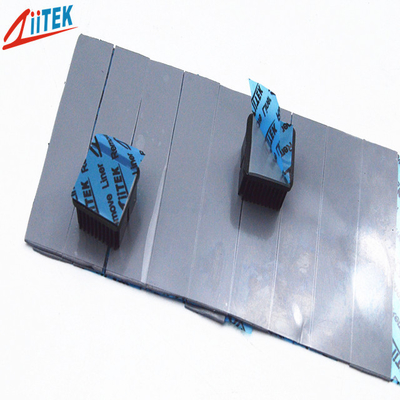
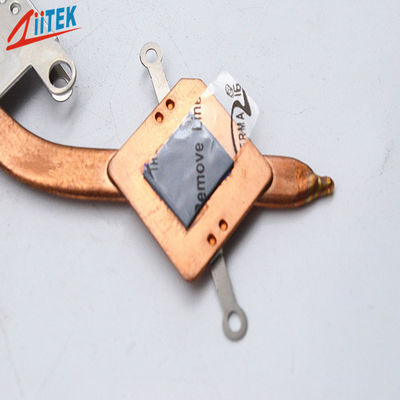
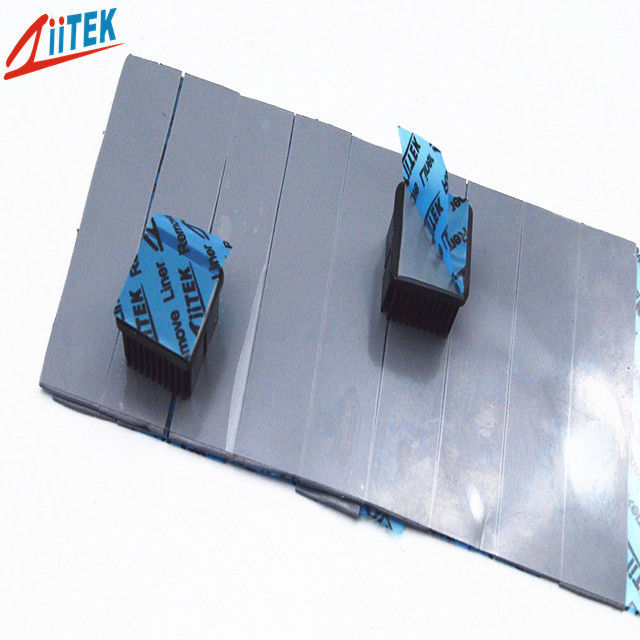
| Name: | Heat Sink Silicone Thermal Pad 0.5mm Thickness Thermal Interface Material For Heat Dissipation In LED TV Systems | Keyword: | Silicone Thermal Pad |
|---|---|---|---|
| Feature: | Good Softness And Fillability | Color: | Gray |
| Thickness: | 0.5mmT | Hardness: | 75 Shore 00 |
| Application: | LED TV Systems | Density(g/cm³): | 2.8 |
| Thermal Conductivity(W/m·K): | 2.0 | ||
| Highlight: | 0.5mm Heat Sink Insulation Pad,LED TV Heat Sink Insulation Pad,0.5mm Thermal Pad For Heat Sink |
||
The Heat Sink Silicone Thermal Pad (0.5mm Thickness) is a high-performance thermal interface material engineered for efficient heat dissipation in LED TV systems and other demanding electronic applications. This structurally supportive pad reliably fills interface gaps, transfers heat, and provides mechanical support for stacked components while resisting compressive deformation.
Ziitek, founded in 2006, is a high-tech enterprise specializing in independent research and development, production, and sales. The company is committed to providing customers worldwide with products and comprehensive solutions for heat conduction, heating, sealing, and EMI shielding.
Headquartered in Dongguan, Guangdong Province, Ziitek operates production bases in Kunshan (Jiangsu Province), Taiwan Province, and Vietnam. This global production capacity layout ensures rapid response and efficient delivery. With an R&D team composed of senior engineers, Ziitek pursues independent innovation to develop cutting-edge products that meet the needs of new energy vehicles, energy storage systems, AI servers, 5G communications, aerospace, and other advanced fields — with the goal of becoming a trusted strategic partner of customers.
The TIF®120-20-10UF Series is a structurally supportive thermal pad designed to provide excellent heat dissipation while ensuring structural support and durability. It reliably fills interface gaps, transfers heat, and offers mechanical support for stacked components, resisting compressive deformation. This product is an ideal choice for applications requiring a balance between heat dissipation, insulation, and mechanical stability.
| Property | Value | Test Method |
|---|---|---|
| Color | Gray | Visual |
| Construction & Composition | Ceramic filled silicone elastomer | ZKTM J024 |
| Density (g/cm³) | 2.8 | ASTM D792 |
| Thickness Range (inch/mm) | 0.010~0.200 / 0.25~5.00 | ASTM D374 |
| Hardness (Shore OO) | 75 | ASTM 2240 |
| Recommended Operating Temperature | -40 to 200°C | ZKTM J025 |
| Breakdown Strength (V/mm) | ≥5500 | ASTM D149 |
| Dielectric Constant @1MHz | 6.5 | ASTM D150 |
| Volume Resistivity (Ohm-cm) | >1.0×10¹² | ASTM D257 |
| Flame Rating | V-0 | UL 94 (E331100) |
| Thermal Conductivity (W/m-K) | 2.0 | ASTM D5470 |
| Thermal Conductivity (W/m-K) | 2.0 | ISO 22007 |
A: Please provide detailed information about the product, such as size (length, width, thickness), color, specific packaging requirements, and purchasing quantity.
A: During the packaging process, preventive measures are taken to ensure the goods remain in good condition during storage and delivery.
A: A thermal silicone pad is a pre-formed TIM (Thermal Interface Material) typically made of a silicone-based material and thermally conductive fillers. It is designed to fill gaps between heat sources and heat sinks. Depending on the product formulation, thermal silicone pads can also provide electrical insulation.
A: Key advantages include easy installation, controlled thickness, good flexibility, and effective gap-filling capability. Depending on the application, thermal silicone pads can also be designed with different levels of thermal conductivity, hardness, flame resistance, and electrical insulation.
A: Not necessarily. If the pad is too thin to adequately fill the actual gap, proper interface contact may not be achieved. The appropriate thickness should be selected based on the actual structural tolerances and application requirements.
Contact Person: Dana Dai
Tel: +86 18153789196
Overall Rating
Rating Snapshot
The following is the distribution of all ratingsAll Reviews